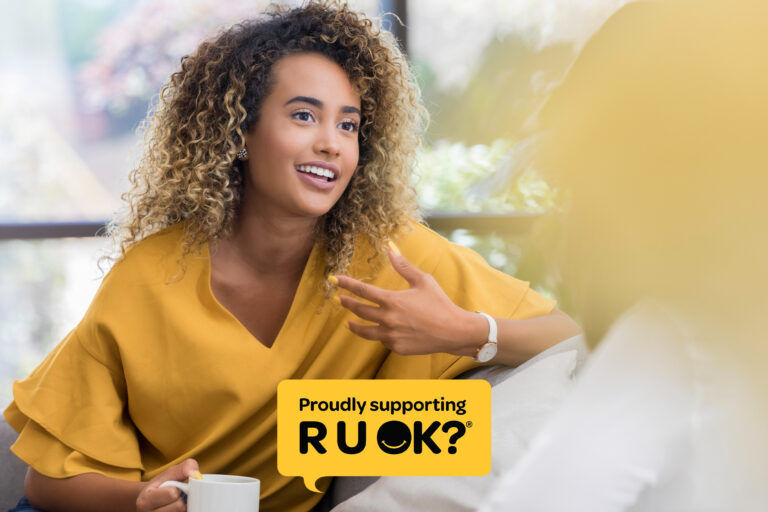
Sometimes, the people who need a conversation the most aren’t the ones who ask for one.
They may be a friend who has been quieter than usual, a colleague who appears overwhelmed, a relative going through a difficult period, or someone who simply hasn’t seemed like themselves lately.
More often than not, these people want to speak up and share what’s bothering them, but fail to do so due to a variety of reasons.
This is where R U Ok? Day comes in. Returning on Thursday, 10 September 2026, this year’s campaign centres around the, ‘Ask R U Ok? Any Day,’ theme.
This year’s theme encourages Australians to treat checking in on their loved ones as an ongoing habit, as opposed to an act committed on a sole day of the year.
Why does R U OK? Day matter?
Since launching in 2009, R U OK? has become an important part of Australia’s mental health and suicide prevention landscape.
The premise is straightforward: meaningful conversations and stronger social connections can play an important role in helping people through difficult periods. By creating opportunities for people to talk openly, we can make it easier for someone to let others know when they aren’t coping.
The need for this conversation has never been as significant as now. According to the Australian Institute of Health and Welfare, approximately 1 in 5 Australians experienced a mental health disorder in the past 12 months, while the latest Australian Bureau of Statistics data recorded 3,326 deaths by suicide in Australia in 2024. Across the country, more than nine people die by suicide each day, highlighting why suicide remains an important public health issue across modern Australia.
What does ‘Ask R U OK? Any Day’ mean?
The 2026 theme challenges us to think beyond the yellow signs, social media posts and conversations that appear each September. Because someone might need to hear ‘R U Ok’ tomorrow, or next week, or months from now.
Their difficult circumstances don’t wait until R U OK? Day to present themselves. Stress, grief, relationship and financial difficulties, loneliness, and other life experiences that can negatively impact our wellbeing can appear at any time of year.
That’s why regular check-ins are so valuable. They don’t require you to know exactly what to say or have potential solutions at hand immediately. They simply require you to listen, allow someone to talk, and consider what support might be helpful to them.
It is also important to remember that asking ‘R U OK?’ doesn’t mean assuming that someone is struggling. It can simply be a way of showing that you’ve noticed them and that you’re there if they ever need support.
How to have an R U OK? conversation
Starting a conversation about someone’s wellbeing can feel uncomfortable, particularly if you’re worried about getting it wrong. To help with this, R U OK? recommends a four-step approach to help guide these conversations.
1. Ask R U OK?
Think about what you’ve noticed and choose an appropriate time to approach the person. Being specific about why you’re checking in can help make the conversation feel genuine rather than routine.
2. Be ready to listen
If someone tells you they’re not OK, give them the time and space to talk.
Listen without judgement and avoid immediately trying to fix the situation. You don’t need to fill every silence or come up with the perfect response. Sometimes, having someone who is prepared to genuinely listen can make a significant difference.
3. Encourage support
Ask what you can do to help and consider what other support might be available. For some people, that could mean talking with a trusted friend or family member. For others, professional support may be appropriate.
Supporting someone can also mean helping them connect with the people and services that are equipped to provide further assistance.
4. Keep the conversation going
One conversation shouldn’t necessarily be the end of the conversation. Following up demonstrates that your concern wasn’t simply a question asked in passing. It shows that you genuinely care about how they’re going.
It’s OK to ask more than once
One of the most important messages behind this year’s theme is that checking in shouldn’t be a once-a-year activity.
Making regular conversations about wellbeing part of our relationships can help create a culture where people feel more comfortable speaking up when they aren’t OK.
And while one conversation cannot solve the complex factors that contribute to suicide, it can help someone feel seen, heard and connected.
So, this R U OK? Day, ask the question. But don’t let the conversation stop on 10 September. For more information, visit: www.ruok.org.au.